





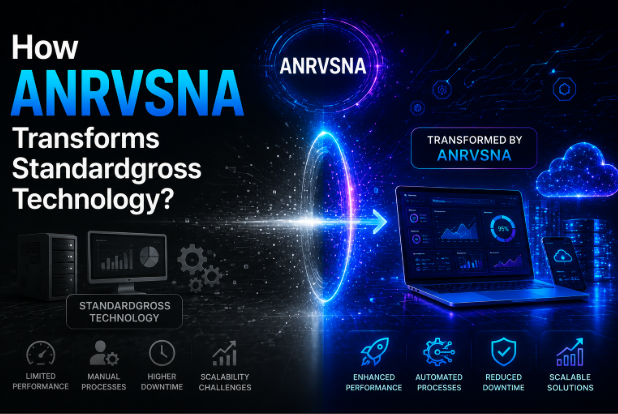
Technology continues to evolve at a rapid pace, forcing businesses to rethink how they manage operations, data, and customer experiences. Traditional systems that once served organizations effectively are now struggling to keep up with increasing demands for speed, automation, and intelligent decision-making. This is where the concept behind how ANRVSNA transforms Standardgross technology? becomes important.
ANRVSNA represents a modern approach to technological innovation that integrates advanced tools such as artificial intelligence, machine learning, automation, and real-time analytics into traditional Standardgross systems. By combining modern digital capabilities with existing infrastructures, organizations can improve efficiency, reduce operational costs, and gain a competitive advantage.
In this detailed guide, we will explore how ANRVSNA transforms Standardgross technology, its key features, benefits, challenges, industry applications, and future potential.
Understanding Standardgross Technology
Before understanding the transformation process, it is essential to understand what Standardgross technology represents.
Standardgross technology refers to conventional technological systems used by organizations to manage operations, store information, process transactions, and support daily business functions. These systems often rely on predefined workflows and manual processes.
For many years, Standardgross technology has provided reliable solutions for businesses. However, as digital transformation accelerates, traditional systems face several limitations, including slower processing speeds, reduced scalability, and limited automation capabilities.
Core Characteristics of Standardgross Technology
Traditional Standardgross systems often include:
- Fixed operational workflows
- Basic data management capabilities
- Limited automation features
- Manual reporting processes
- Conventional security structures
- Restricted scalability options
While these characteristics worked effectively in the past, modern businesses require greater flexibility and intelligence.
Strengths and Weaknesses
| Strengths | Weaknesses |
|---|---|
| Reliable operations | Limited automation |
| Established infrastructure | Slow decision-making |
| Familiar workflows | Higher operational costs |
| Stable performance | Difficulty handling large data volumes |
| Proven business processes | Reduced adaptability |
These limitations create the need for innovative solutions like ANRVSNA.
What Is ANRVSNA?
ANRVSNA is a technology-driven framework that focuses on improving traditional business systems through advanced digital technologies. It introduces intelligence, automation, and adaptability into existing infrastructures.
Rather than replacing traditional systems completely, ANRVSNA enhances them by integrating modern tools that improve overall performance.
The primary goal of ANRVSNA is to help organizations:
- Increase efficiency
- Improve decision-making
- Reduce manual workloads
- Enhance customer experiences
- Support scalable growth
By combining modern technologies with existing systems, ANRVSNA creates a bridge between traditional operations and future-ready business environments.
The Need for Technology Transformation
The digital economy has created new challenges for businesses across every industry. Organizations are now expected to process larger amounts of data, respond faster to customer needs, and maintain high levels of operational efficiency.
Traditional systems often struggle with these expectations.
Growing Data Volumes
Modern businesses generate enormous amounts of data every day. Managing and analyzing this information manually becomes increasingly difficult.
Rising Customer Expectations
Customers expect fast service, personalized experiences, and immediate responses. Traditional systems frequently lack the flexibility required to meet these demands.
Increased Competition
Organizations must innovate continuously to remain competitive. Companies relying solely on outdated technology may find it difficult to compete with digitally advanced competitors.
Demand for Automation
Businesses seek ways to eliminate repetitive tasks and improve productivity. Automation has become a critical factor in achieving operational excellence.
These challenges explain why understanding how ANRVSNA transforms Standardgross technology? has become increasingly relevant.
How ANRVSNA Transforms Standardgross Technology
The transformation process involves multiple technological improvements that modernize traditional systems and make them more intelligent.
Integration of Artificial Intelligence
Artificial intelligence plays a central role in ANRVSNA’s transformation strategy.
AI enables systems to analyze data, recognize patterns, and make intelligent recommendations. Instead of relying solely on human judgment, organizations can use AI-driven insights to improve decision-making.
Benefits of AI integration include:
- Faster business analysis
- Improved forecasting
- Better resource allocation
- Enhanced customer support
- Intelligent process optimization
AI allows businesses to move beyond reactive management and adopt proactive strategies.
Machine Learning Implementation
Machine learning helps systems learn from historical data and continuously improve performance.
Unlike traditional software that follows fixed instructions, machine learning algorithms adapt over time by analyzing new information.
Machine learning can assist with:
- Predictive maintenance
- Demand forecasting
- Fraud detection
- Customer behavior analysis
- Risk assessment
This capability significantly improves the effectiveness of Standardgross technology.
Advanced Automation Solutions
Automation is one of the most visible ways ANRVSNA transforms traditional systems.
Many business processes involve repetitive tasks that consume valuable employee time. ANRVSNA automates these activities, allowing staff to focus on higher-value work.
Examples include:
- Invoice processing
- Data entry
- Customer support workflows
- Inventory management
- Report generation
Automation reduces human error while increasing speed and consistency.
Real-Time Data Analytics
Traditional reporting systems often provide delayed information.
ANRVSNA introduces real-time analytics that allow organizations to monitor performance instantly.
Real-time analytics help businesses:
- Identify problems quickly
- Track key performance indicators
- Monitor customer activity
- Improve operational efficiency
- Make faster strategic decisions
Access to current information creates a significant competitive advantage.
Key Features of ANRVSNA Technology
Several features distinguish ANRVSNA from conventional technology solutions.
Smart Automation
Automation tools streamline operations while minimizing manual intervention.
Cloud-Based Infrastructure
Cloud technology provides flexibility, accessibility, and scalability for modern organizations.
Data Intelligence
Advanced analytics convert raw data into actionable insights.
Enhanced Security
Modern security measures protect sensitive business information from evolving cyber threats.
Scalability
Organizations can expand their technological capabilities without major infrastructure changes.
System Integration
ANRVSNA supports seamless communication between different software platforms and business systems.
Major Benefits for Businesses
The advantages of implementing ANRVSNA extend across multiple areas of business operations.
Increased Productivity
Employees spend less time on repetitive tasks and more time on strategic initiatives.
Automation and intelligent systems help complete work faster and more accurately.
Reduced Operational Costs
By minimizing manual processes, organizations can lower labor expenses and reduce costly errors.
Improved efficiency often results in substantial long-term savings.
Improved Accuracy
Human errors can negatively impact business performance.
ANRVSNA’s intelligent systems improve accuracy by automating calculations, reporting, and data processing.
Faster Decision-Making
Access to real-time information enables leaders to make informed decisions quickly.
Organizations no longer need to wait for manually generated reports.
Better Customer Experience
Personalized services and faster response times improve customer satisfaction.
Modern consumers value convenience and efficiency, both of which ANRVSNA helps deliver.
Competitive Advantage
Businesses that adopt advanced technologies often outperform competitors still relying on traditional systems.
Industry Applications
ANRVSNA’s flexibility allows it to support a wide range of industries.
Healthcare Sector
Healthcare organizations use advanced technologies to improve patient care and administrative efficiency.
Applications include:
- Patient record management
- Medical data analysis
- Diagnostic support systems
- Appointment scheduling automation
Financial Services
Financial institutions benefit from intelligent risk management and fraud detection systems.
Common uses include:
- Transaction monitoring
- Credit risk assessment
- Investment analysis
- Regulatory compliance support
Manufacturing Industry
Manufacturers leverage automation and predictive analytics to improve production processes.
Key applications include:
- Equipment monitoring
- Predictive maintenance
- Production optimization
- Supply chain management
Retail and E-Commerce
Retailers use ANRVSNA technologies to understand customer behavior and improve operations.
Applications include:
- Personalized recommendations
- Inventory forecasting
- Customer analytics
- Sales optimization
Education Sector
Educational institutions can improve learning experiences and administrative efficiency through intelligent technologies.
Examples include:
- Student performance tracking
- Personalized learning programs
- Administrative automation
- Resource management
ANRVSNA vs Traditional Standardgross Technology
The differences between the two approaches are substantial.
| Feature | Traditional Standardgross Technology | ANRVSNA-Powered Technology |
|---|---|---|
| Automation | Limited | Advanced |
| Analytics | Basic Reporting | Real-Time Insights |
| Scalability | Moderate | High |
| Decision Making | Manual | AI-Assisted |
| Data Processing | Slower | Faster |
| Adaptability | Low | High |
| Customer Experience | Standard | Personalized |
| Efficiency | Moderate | Optimized |
This comparison clearly illustrates why organizations are exploring modern transformation solutions.
Challenges During Implementation
Although the benefits are significant, implementing ANRVSNA may present certain challenges.
Integration Complexity
Existing systems may require modifications to support modern technologies.
Organizations must carefully plan integration strategies to avoid operational disruptions.
Employee Training
Employees need training to effectively use new systems and technologies.
Successful adoption depends on user acceptance and understanding.
Initial Investment
Technology transformation often requires upfront financial investment.
However, long-term benefits frequently outweigh initial costs.
Data Migration
Transferring data from legacy systems to modern platforms requires careful planning and execution.
Organizations must ensure data accuracy and security throughout the process.
Change Management
Employees and stakeholders may resist organizational changes.
Effective communication and leadership support are essential for successful implementation.
Best Practices for Successful Adoption
Organizations can maximize success by following proven implementation strategies.
Develop a Clear Strategy
Define goals, timelines, and expected outcomes before beginning the transformation process.
Involve Key Stakeholders
Engage leadership teams, employees, and technical experts throughout implementation.
Provide Continuous Training
Ongoing education helps employees adapt to new technologies.
Monitor Performance
Regularly evaluate system performance and identify opportunities for improvement.
Focus on Continuous Innovation
Technology transformation should be viewed as an ongoing journey rather than a one-time project.
Future Trends and Innovations
The future of ANRVSNA technology appears highly promising.
Several emerging trends are expected to shape future developments.
More Advanced Artificial Intelligence
AI systems will become increasingly capable of handling complex business processes and strategic decision-making.
Intelligent Automation
Automation solutions will become smarter and more autonomous.
Enhanced Predictive Analytics
Organizations will gain deeper insights into future opportunities and potential risks.
Hyper-Personalization
Businesses will deliver highly customized experiences tailored to individual customer preferences.
Connected Digital Ecosystems
Organizations will benefit from seamless integration between multiple technologies and platforms.
These advancements will further strengthen the role of ANRVSNA in business transformation.
Why ANRVSNA Is Shaping the Future of Technology
The increasing importance of data, automation, and artificial intelligence has created demand for solutions that bridge the gap between traditional and modern systems.
ANRVSNA addresses this need by helping organizations modernize existing infrastructures without completely replacing them.
Through intelligent automation, real-time analytics, machine learning, and scalable architecture, businesses can improve efficiency while preparing for future growth.
As technology continues to evolve, ANRVSNA is positioned to play an important role in helping organizations remain competitive and innovative.
Conclusion
Understanding how ANRVSNA transforms Standardgross technology? reveals the growing importance of digital transformation in today’s business environment. Traditional systems provide a solid foundation, but modern organizations require greater intelligence, automation, scalability, and data-driven decision-making capabilities.
ANRVSNA enhances Standardgross technology by integrating artificial intelligence, machine learning, automation, and real-time analytics. These innovations help businesses improve productivity, reduce costs, increase accuracy, and deliver better customer experiences.
As industries continue embracing digital transformation, organizations that adopt advanced solutions like ANRVSNA will be better equipped to navigate future challenges and capitalize on emerging opportunities.
Frequently Asked Questions (FAQs)
1. What is ANRVSNA in technology?
ANRVSNA is a technology framework that enhances traditional systems using AI, machine learning, automation, and real-time analytics.
2. How does ANRVSNA improve Standardgross technology?
It improves efficiency, automates repetitive tasks, enhances decision-making, and provides real-time business insights.
3. Which industries benefit from ANRVSNA?
Healthcare, finance, manufacturing, retail, education, and many other industries can benefit from its capabilities.
4. Is ANRVSNA suitable for small businesses?
Yes, scalable solutions allow businesses of various sizes to implement ANRVSNA technologies according to their needs.
5. What is the biggest advantage of ANRVSNA?
Its ability to combine automation, intelligence, and real-time analytics to improve business performance.
6. What challenges can organizations face during implementation?
Common challenges include integration complexity, employee training, data migration, and initial investment costs.
7. What does the future hold for ANRVSNA?
Future developments are expected to include more advanced AI, intelligent automation, predictive analytics, and connected digital ecosystems.
Related Articles
Droven.io Technology Blog: Exploring AI, Innovation, and Modern Technology Trends
Technologies HearthssGaming: Exploring the Future of Gaming Innovation
Future Tech Solutions WTGTechGeek: A Complete Guide to Modern Innovation and Emerging Technologies
World Tech Graphic Design GFXTek: Complete Guide to Technology, Creativity, and Digital Design