





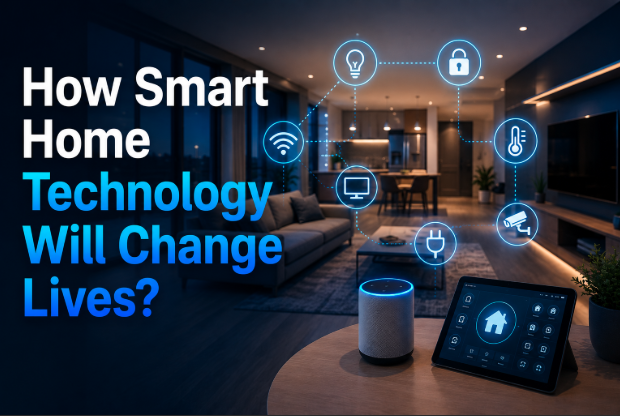
Technology has transformed nearly every part of modern life, and our homes are no exception. Smart home technology is rapidly changing how people live, work, and interact with their surroundings. From voice-controlled lighting to intelligent security systems, smart homes are becoming more efficient, convenient, and personalized than ever before.
As internet-connected devices continue to evolve, the impact of smart homes will extend far beyond convenience. They will improve safety, reduce energy waste, support healthcare needs, and create more sustainable living environments. Understanding how smart home technology will change lives helps us prepare for a future where homes can anticipate our needs and respond automatically.
What Is Smart Home Technology?
Smart home technology refers to a network of connected devices that communicate with each other and can be controlled remotely through smartphones, tablets, or voice assistants. These devices use internet connectivity, sensors, and artificial intelligence to automate everyday household tasks.
A smart home may include devices such as:
- Smart thermostats
- Smart lighting systems
- Security cameras
- Smart locks
- Voice assistants
- Smart appliances
- Health monitoring devices
The main goal of smart home technology is to improve convenience, efficiency, security, and comfort. Instead of manually controlling every device, homeowners can automate routines and manage their homes from virtually anywhere.
The Evolution of Smart Homes
The concept of home automation is not entirely new. Early automation systems appeared decades ago, allowing people to control lights and appliances through simple timers. However, these systems were limited and often expensive.
The rise of high-speed internet, cloud computing, and smartphones dramatically accelerated smart home development. Today, devices can connect seamlessly and provide real-time updates.
The evolution of smart homes can be summarized in the following table:
| Era | Key Features |
|---|---|
| 1970s-1990s | Basic timers and programmable devices |
| 2000s | Internet-connected home systems |
| 2010s | Smart speakers and mobile control |
| 2020s | AI-powered automation and integrated ecosystems |
| Future | Fully autonomous intelligent homes |
As technology continues to advance, homes are becoming increasingly capable of learning and adapting to user preferences.
Making Everyday Life More Convenient
One of the biggest reasons people adopt smart home technology is convenience. Everyday tasks that once required manual effort can now be automated.
Imagine waking up in the morning and having your blinds open automatically, your coffee machine start brewing, and your thermostat adjust the temperature before you even leave bed. These automated routines save time and simplify daily living.
Voice assistants play a major role in modern smart homes. With simple voice commands, users can:
- Turn lights on or off
- Play music
- Check weather forecasts
- Set reminders
- Control appliances
Smart home systems also allow remote access. If someone forgets to lock their door or turn off the lights, they can do so instantly through a smartphone app.
As more devices become interconnected, convenience will continue to increase, making homes more responsive to individual lifestyles.
Enhancing Home Security and Safety
Security is one of the most valuable benefits of smart home technology. Traditional security systems often provide limited protection, while smart systems offer real-time monitoring and instant alerts.
Modern smart security features include:
| Security Feature | Benefit |
| Smart Cameras | Live monitoring and video recording |
| Smart Locks | Keyless entry and remote access |
| Motion Sensors | Immediate intrusion detection |
| Video Doorbells | Visitor identification from anywhere |
| Alarm Systems | Instant emergency notifications |
Homeowners can receive alerts directly on their phones if unusual activity is detected. This allows quicker responses and improved peace of mind.
Safety improvements go beyond crime prevention. Smart smoke detectors, carbon monoxide sensors, and water leak detectors can identify hazards early and notify homeowners before serious damage occurs.
Reducing Energy Consumption and Utility Bills
Energy efficiency is another important way smart home technology will change lives. Rising utility costs and environmental concerns are encouraging people to seek smarter ways to manage energy usage.
Smart thermostats can learn household habits and adjust heating or cooling automatically. Smart lighting systems can switch off when rooms are empty, reducing unnecessary electricity consumption.
Here is a comparison of traditional and smart energy management:
| Traditional Home | Smart Home |
| Manual temperature control | Automated climate adjustment |
| Lights left on accidentally | Occupancy-based lighting |
| Limited energy monitoring | Real-time energy tracking |
| Higher utility bills | Improved efficiency and savings |
By optimizing energy use, homeowners can reduce monthly expenses while contributing to environmental sustainability.
Improving Health and Wellness at Home
Health-focused smart devices are becoming increasingly popular. These technologies help create healthier living environments and support personal wellness goals.
Smart air quality monitors can detect pollutants, allergens, and humidity levels. When poor air quality is identified, connected systems can activate air purifiers automatically.
Sleep technology is another growing area. Smart mattresses, sleep trackers, and intelligent lighting systems help improve sleep quality by monitoring patterns and creating optimal sleeping conditions.
Health-related smart devices may include:
- Air quality monitors
- Smart scales
- Fitness trackers
- Sleep monitoring systems
- Connected blood pressure monitors
These tools provide valuable insights that help individuals make healthier lifestyle choices.
Supporting Elderly and Disabled Individuals
One of the most meaningful applications of smart home technology involves supporting elderly individuals and people with disabilities.
Many older adults prefer living independently rather than moving into assisted care facilities. Smart homes make this possible by providing additional safety and convenience.
Examples include:
- Voice-controlled devices for hands-free operation
- Medication reminders
- Fall detection systems
- Emergency response alerts
- Remote health monitoring
For people with mobility limitations, controlling household devices through voice commands can significantly improve daily life.
Smart technology helps create more accessible environments while providing family members with reassurance that loved ones are safe and supported.
The Role of Artificial Intelligence in Smart Homes
Artificial intelligence is the driving force behind many modern smart home systems. AI allows devices to learn user preferences and make intelligent decisions without constant input.
For example, an AI-powered thermostat can analyze daily routines and automatically adjust temperatures based on occupancy patterns. Similarly, smart lighting systems can learn preferred brightness levels throughout the day.
AI contributes to smart homes through:
| AI Capability | Impact |
| Pattern Recognition | Learns user habits |
| Predictive Automation | Anticipates needs |
| Voice Processing | Enables natural communication |
| Data Analysis | Improves efficiency |
| Personalization | Creates customized experiences |
As AI technology becomes more advanced, smart homes will become increasingly proactive and adaptive.
Smart Home Technology and Sustainable Living
Environmental sustainability is becoming a major global priority. Smart home technology offers practical solutions for reducing waste and conserving resources.
Smart irrigation systems can monitor weather conditions and water gardens only when necessary. Energy monitoring tools help identify wasteful habits and encourage efficient consumption.
Sustainable smart home solutions include:
- Solar energy integration
- Smart thermostats
- Automated lighting
- Water conservation systems
- Energy monitoring platforms
These technologies help reduce environmental impact while lowering household expenses.
As climate concerns continue to grow, sustainable smart homes will likely become a standard feature of modern housing.
Challenges and Concerns of Smart Homes
Despite their many benefits, smart homes also present certain challenges.
Privacy remains one of the biggest concerns. Smart devices collect large amounts of data about user behavior and household activities. Protecting this information requires strong cybersecurity measures.
Common challenges include:
- Data privacy concerns
- Potential hacking risks
- Internet dependency
- Device compatibility issues
- Initial setup costs
Homeowners should carefully research products and follow security best practices, such as using strong passwords and regularly updating device software.
Although these concerns are valid, ongoing improvements in cybersecurity are helping address many of these issues.
The Future of Smart Home Technology
The future of smart homes is incredibly promising. Emerging technologies are expected to create even more intelligent and interconnected living environments.
Future smart homes may include advanced robotics, predictive maintenance systems, and fully integrated AI assistants capable of managing nearly every aspect of household life.
Potential future developments include:
- Self-maintaining appliances
- AI-driven healthcare monitoring
- Autonomous cleaning systems
- Smart city integration
- Advanced energy optimization
Homes may eventually anticipate needs before residents even express them, creating unprecedented levels of comfort and efficiency.
The next decade is likely to bring innovations that make today’s smart homes appear relatively basic by comparison.
Conclusion
Understanding how smart home technology will change lives reveals the enormous potential of connected living environments. Smart homes offer far more than convenience. They enhance security, reduce energy consumption, support healthcare needs, improve accessibility, and contribute to environmental sustainability.
As artificial intelligence and automation continue to evolve, smart homes will become increasingly intelligent, personalized, and efficient. While challenges such as privacy and cybersecurity must be addressed, the benefits of smart home technology are likely to outweigh the drawbacks for many households.
The future of living is becoming smarter every year, and smart home technology will play a central role in shaping how people live, work, and interact with their surroundings for generations to come.
Frequently Asked Questions
What is the main purpose of smart home technology?
The main purpose of smart home technology is to improve convenience, efficiency, security, and comfort through connected and automated devices.
How can smart homes save money?
Smart homes reduce energy waste through automated lighting, intelligent climate control, and real-time energy monitoring, leading to lower utility bills.
Are smart homes safe from hackers?
Smart homes can be secure when users implement strong passwords, enable two-factor authentication, and regularly update device software.
What devices are most commonly used in smart homes?
Popular smart home devices include smart speakers, thermostats, cameras, doorbells, locks, lighting systems, and connected appliances.
Will smart homes become more affordable in the future?
Yes. As technology becomes more widespread and manufacturing costs decrease, smart home devices are expected to become more affordable.
How does AI improve smart home functionality?
AI enables devices to learn user habits, automate tasks, personalize settings, and make predictive decisions that improve convenience and efficiency.
Can smart home technology help elderly people live independently?
Yes. Features such as voice control, medication reminders, emergency alerts, and remote monitoring can support independent living.
What are the disadvantages of smart home technology?
Potential disadvantages include privacy concerns, cybersecurity risks, internet dependency, compatibility issues, and initial installation costs.
Related Articles
Edwin Laptop: Complete Guide to Features, Performance, Benefits, and Buying Tips
Camera Processing Services: A Complete Guide to Modern Image and Video Processing
How ANRVSNA Transforms Standardgross Technology?
Laptop for Tuning Cars: Complete Guide for Beginners and Professionals